Instructional design · Science · Clinical learning

Complex information.
Clear learning.
Practical action.

I’m Kris Amatuli, an educator and clinical operations professional designing learning that connects what people know with what they need to do.

Explore my work ↗ Download samples ↓

Education expertise. Workplace perspective.

FEATURED LEARNING EXPERIENCE03:00
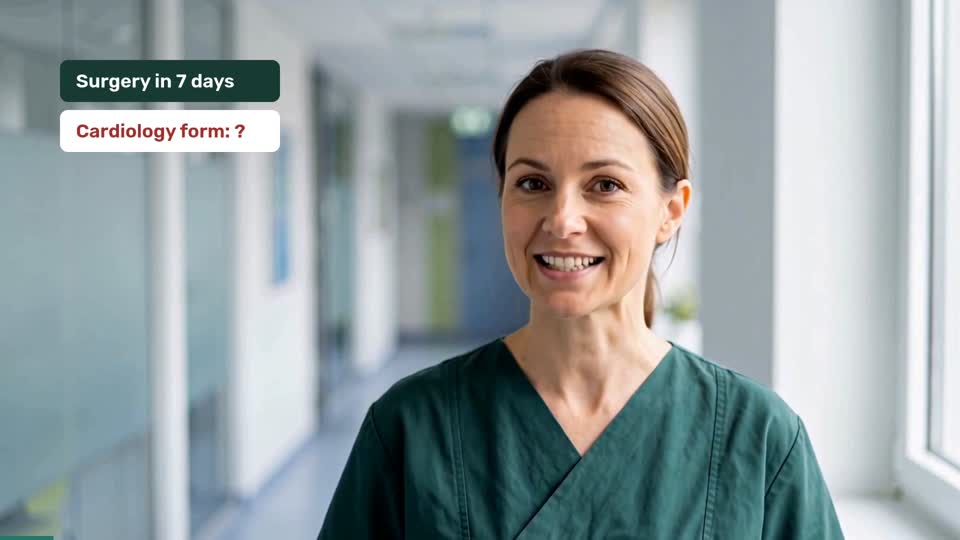
Preview of the medical-clearance training video

Clear the Patient

A practical learning experience for medical-clearance workflows.

Explore the case study ↗
01 / Selected work

Learning grounded in context.

Explore workplace learning, science teaching, and original coursework on AI in education. Demonstration materials are identified below; evaluation plans describe intended measures.

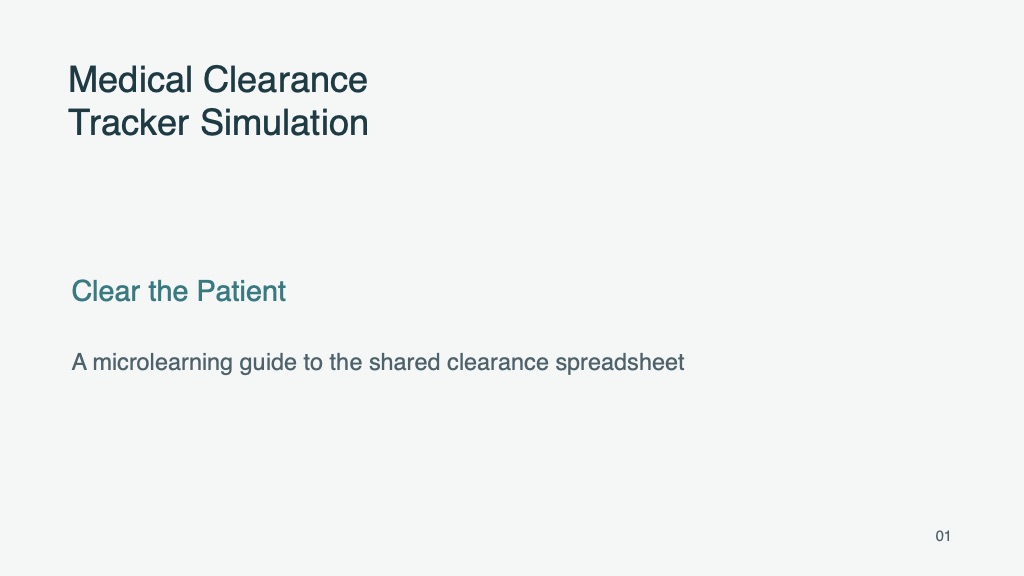
Medical Clearance Tracker Simulation slide deck coverFeatured case study · Design-stage project

Medical Clearance
Tracker Simulation

Helping dental teams document follow-up, distinguish receipt from approval, and escalate unresolved clearance at a seven-day checkpoint.

Performance analysisScenario practiceGagné

Download Keynote deck ↓
Download Pages project ↓

Watch: Clear the Patient

Medical-clearance training video · 3 minutes

Download video · MP4 · Web copy ↓

Try the practice activity ↗

The problem & audience

Dental assistants and coordinators manage requests across outside providers. Inconsistent follow-up documentation can obscure ownership and unresolved items. Training addresses the documentation and escalation behaviors within the team’s control.

Design decisions & my role

The case study connects workplace analysis, learner needs, measurable objectives, and a shared-tracker simulation. Short practice decisions provide immediate explanatory feedback. The demonstration activity and downloadable brief were newly prepared for this portfolio from the case-study concept.

Assessment & evaluation

Assess accurate status, dated follow-up, ownership, next action, and escalation. A proposed pilot would compare documentation completeness and clearance timing with a baseline. This portfolio reports no implementation outcomes.

Science education · New demonstration sample

Making the
Baroreceptor Reflex Visible

A familiar lab scenario turns a physiological mechanism into a sequence learners can explain, predict, and apply.

A&PCausal reasoningFormative assessment

Read the scenario guide ↗

Learning challenge & design

Learners may memorize a reflex without explaining its causal links. The sample asks them to predict each response before reviewing the explanation, then transfer the mechanism to a rise in pressure.

Assessment & accessibility

A causal-chain rubric checks the direction and explanation of each physiological change. Labeled diagrams and written explanations offer complementary ways to demonstrate understanding. This is a newly created sample, not evidence of a completed classroom evaluation.

02 / AI in learning design

AI as a learning partner.
Educator judgment at the center.

Two original coursework samples show how I use AI to develop active learning experiences, iterate on assignment design, and reflect on accuracy and alignment.

Original coursework · A&P learning activity

An AI Simulated
Patient Interview

Students interview ChatGPT as a fictional patient, connect symptoms with anatomical structures and physiological processes, and explain their reasoning in patient-friendly language.

Role-playLearning objectivesAssessment rubric
What learners do

Choose a body system, use a patient-role prompt, ask at least 15 interview questions, explain the underlying anatomy and physiology, and write a 300–500 word reflection on the interaction and AI’s limitations. The activity explicitly focuses on physiology rather than diagnosis or treatment.

Design decisions & assessment

The assignment gives learners control over follow-up questions and asks them to translate complex concepts for a patient audience. Its 100-point rubric assesses interview quality, terminology, physiological accuracy, communication, reflection, and professionalism.

My reflection & project status

My reflection describes shifting from a fixed question-and-answer exercise to an evolving conversation that supports application and communication. Increased engagement is an anticipated benefit; this artifact does not report measured learner outcomes.

View original PDF ↗

Original coursework · AI-assisted design process

AI Benefits
& Challenges

A documented prompt-and-refine process for generating varied A&P assignments, adding student interaction, and reflecting on the educator’s role in reviewing AI output.

Prompt iterationCritical thinkingReflective practice
The design need & iteration

The initial request asks for four college-level assignments involving critical thinking and problem solving across organ systems. Follow-up prompts expand engagement and response opportunities. The document records AI-generated assignment ideas, assessment material, and my personal reflection.

What this sample demonstrates

The process explores case analysis, concept maps, infographics, presentations, and peer interaction. My reflection emphasizes using AI to spark ideas while reviewing scientific accuracy, academic rigor, learning objectives, and course alignment.

How to read the artifact

This is a coursework process record containing labeled LLM responses and instructor reflection. Generated diagnostic and treatment tasks are draft ideas for educator review, not validated clinical instruction or evidence of classroom effectiveness.

View original PDF ↗

03 / Approach

Start with the performance.
Design for the learner.

Understand → Align

I begin with what learners need to do differently, the barriers they face, and the context in which they will apply the learning. Observable objectives guide the activity and assessment.

Practice → Refine

I use clinical scenarios, guided practice, and feedback to connect concepts to action. ADDIE, backward design, Bloom’s Taxonomy, and Gagné’s Nine Events help structure those choices.

04 / About Kris

Where education meets
clinical operations.

My background spans university anatomy and physiology instruction, biology labs, course design, and dental implant center operations. That combination shapes how I translate complex information into clear, practical learning experiences.

I bring a supportive teaching style, high expectations, and attention to the realities of the workplace. My interests include clinical education, workforce training, and learning experiences that help people make informed decisions.

Experience with Canvas Studio, Articulate, Adobe, Photoshop, and AI-assisted content development. Tool use varies by project.
05 / Sample library

Take a closer look.

Download original coursework PDFs and self-contained HTML demonstrations. Open HTML samples in a browser; the guides can also be printed or saved as PDF.

Portfolio demonstrations use fictional scenarios. These samples are intended for learning design review.